
Federal Reserve Chair Kevin Warsh warned of a potential "shock" to the U.S. economy delivered by a rise in artificial intelligence spending, pledging to contain price increases as a flood of private sector funds drives up demand.
"If you’re a central banker, you’re in the business of trying to ensure stable prices and full employment, you’ve got to recognize this as a shock," Warsh said in Bangkok, Thailand, at a conference organized by the International Monetary Fund.
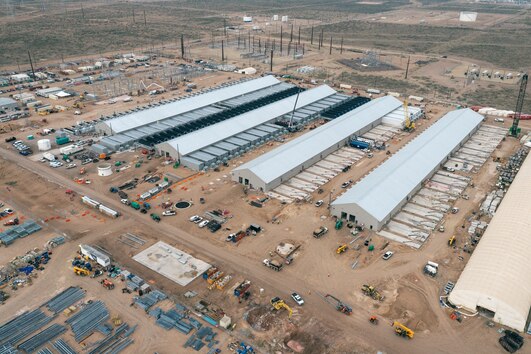
A surge in AI spending has helped boost the U.S. economy in recent quarters. In theory, an onrush of investment in activities like chip manufacturing and data center construction could put upward pressure in general on consumer prices, unless the demand is offset by a new supply of goods and services.
"It’s obviously hitting the demand side of the economy before it’s hitting the supply side of the economy," Warsh said.
Warsh, who took the helm of the Fed in May, has previously weighed in on the potential impact of AI on the labor market and wider economy.
On Friday, Warsh reiterated his optimism about AI, saying the technology would ultimately generate added productivity and wealth.
But, Warsh added, "the path from where we are to there is likely to be a very bumpy one."
"We really don’t know what the market structure will be of these new technologies," Warsh said. "Who's going to be making the money?"
Warsh acknowledged other shocks faced by the U.S. economy, including "shocks of war and military conflict."
The outbreak of the Iran war in February imposed a historic oil supply shock and caused an acceleration of price increases in many countries. A U.S. government report issued this week showed inflation had climbed to a 4-month high in September as the Middle East conflict continued to drive up gasoline prices.
Prices rose 3.7% in September, according to new data from the U.S. Bureau of Labor Statistics.
Inflation stands more than a percentage point higher than the Fed's target rate of 2%.
"It’s hard to be in a discussion with central bankers and not compare notes and hear the same thing about the surge in prices," Warsh said on Friday.
He later added: "I’ve heard resolve from my colleagues around the world to deliver price stability. I’ve certainly delivered that resolve."
Price hikes prompted the Fed to raise interest rates a quarter of a percentage point in September, marking the central bank's first rate increase since 2023.
An increase to the benchmark interest rate aims to slash inflation by slowing the economy and eating away at demand, though the policy typically yields results after a lag time lasting several months.
The next meeting of Fed policymakers takes place on Oct. 28, just days before the midterm elections.
Consistent with his approach in previous public appearances, Warsh opted against issuing a forecast about what the central bank may do at its meeting later this month.
"I don’t pre-judge meetings. I don’t believe in saying now what I might do at the meetings we have over the balance of this year," Warsh said.
Many investors appeared to interpret Warsh's posture as a sign the Fed may hold interest rates steady later this month.
As of Friday morning, investors peg the chance of the Fed maintaining current interest rates at about 86%, which marks an uptick from about 55% on Wednesday, according to CME Group’s FedWatch Tool, a measure of market sentiment.
Copyright © 2026, ABC Audio. All rights reserved.