


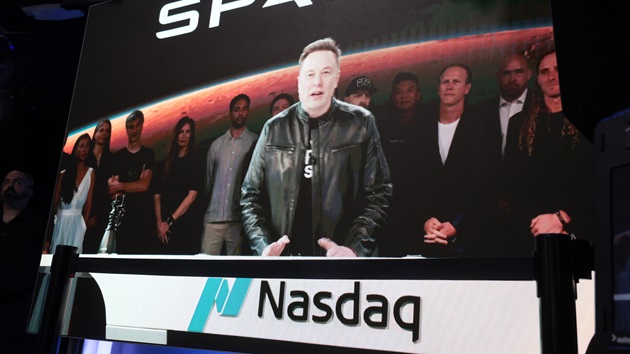
(NEW YORK) -- Elon Musk-led rocket and AI company SpaceX joined the Nasdaq 100 on Tuesday, clearing the way for a potential influx of investment as funds pegged to the major index were expected to add the firm.
SpaceX will all but certainly become a part of many individuals’ 401(k) accounts soon. Those accounts often hold index funds, which track indexes like the Nasdaq 100.
Until recently, newly listed companies were barred from major indexes until after an extended waiting period. But the Nasdaq issued a rule change in May permitting "fast entry" to the Nasdaq-100 for some major IPOs. Over the ensuing weeks, some other top exchanges also tweaked their rules.
Entry into the index marked the latest development for SpaceX after a roller coaster in the company's shares following an initial public offering (IPO) last month. The stock price soared roughly 50% in the initial three days after the public listing on June 12, before shedding just about all of those gains within days.
SpaceX shares dropped nearly 6% in early trading on Tuesday, putting the price at about $151. The SpaceX IPO, the largest ever, opened trading last month at $150 per share.
The IPO made Musk the first trillionaire, vaulting the world’s richest person further ahead of other financial titans. After SpaceX shares tumbled on Tuesday, Musk's net worth fell to $973 billion, according to Forbes. The second-wealthiest person alive, Google founder Larry Page, holds a net worth of $303 billion, Forbes said.
The IPO pulls in fresh funds for the Texas-based firm, which oversees Musk's ambitions in the fast-growing but cost-intensive AI industry. The company aims to raise as much as $75 billion from its public listing.
SpaceX builds and operates spacecraft, including thousands of satellites deployed in support of its Starlink satellite internet service. In February, the company merged with xAI, a Musk-led AI company that offers a chatbot in competition with the likes of OpenAI's ChatGPT and Anthropic's Claude.
The company’s revenue jumped to $18.7 billion in 2025, soaring 33% compared to the previous year, a financial filing showed. Nearly a quarter of that revenue came from Starlink, which counted millions of subscribers. Still, SpaceX failed to turn a profit, registering a loss of $4.9 billion last year.
Copyright © 2026, ABC Audio. All rights reserved.